The University and Erlangen
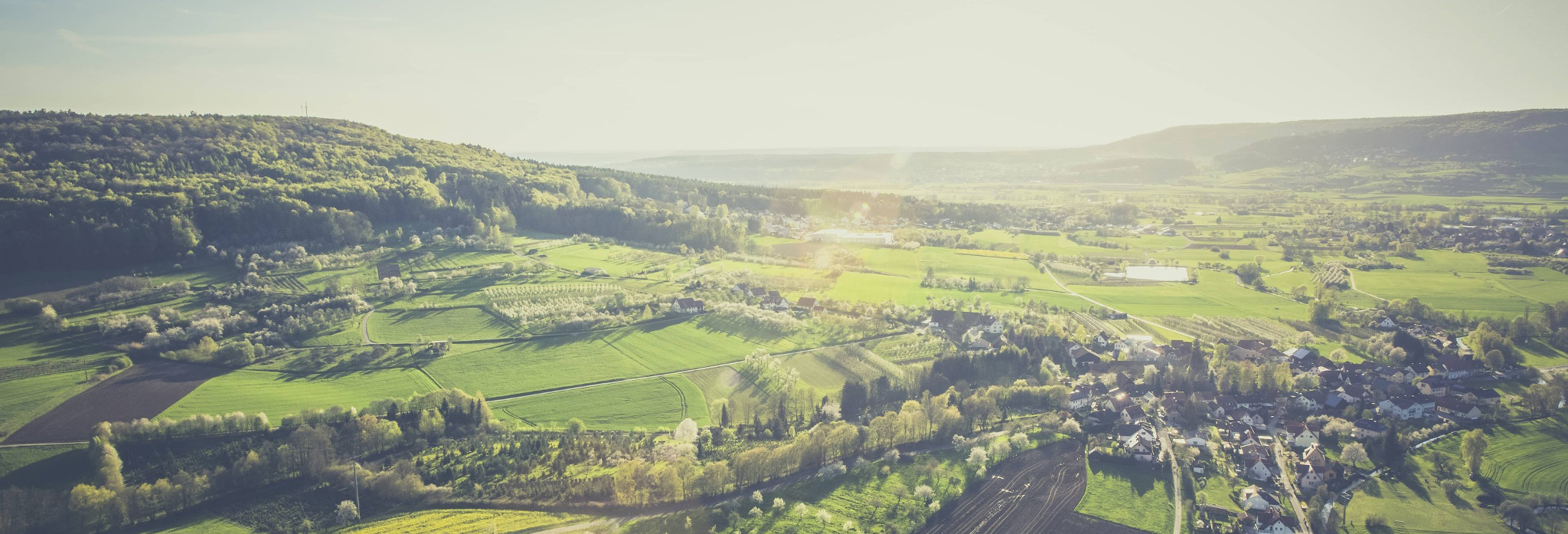 Wandering in the Walberla, in the Frankonian Switzerland - about 20 km Northeast of Erlangen (Photo by markusspiske, pixabay.com)
Friedrich-Alexander-Universität Erlangen-Nürnberg (FAU)
Founded in 1743, Friedrich-Alexander-Universität Erlangen-Nürnberg (FAU) is a research university primarily based in Erlangen with campuses across the Nuremberg metropolitan area. FAU is consistently ranked highly in both national and international rankings. According to Reuters Top 100, FAU is the most innovative university in Germany, the 2nd in Europe, and the 14th in the world. In the „Shanghai Ranking“ of Academic Ranking of World Universities, 2025, FAU belongs to the top 300 universities worldwide.
The courses in the master and the Faculty of Natural Sciences are in Erlangen, but thanks to efficient public transport, students can choose from a wide housing offer, from lively downtown Nuremberg to countryside locations outside Erlangen.
The Faculty of Natural Sciences is organized into five departments. We are part of the Department of Geology and Geography, which is represented by two institutions: the GeoZentrum Nordbayern (focusing on geosciences), and the The Institute of Geography (focusing on physical and cultural geography).
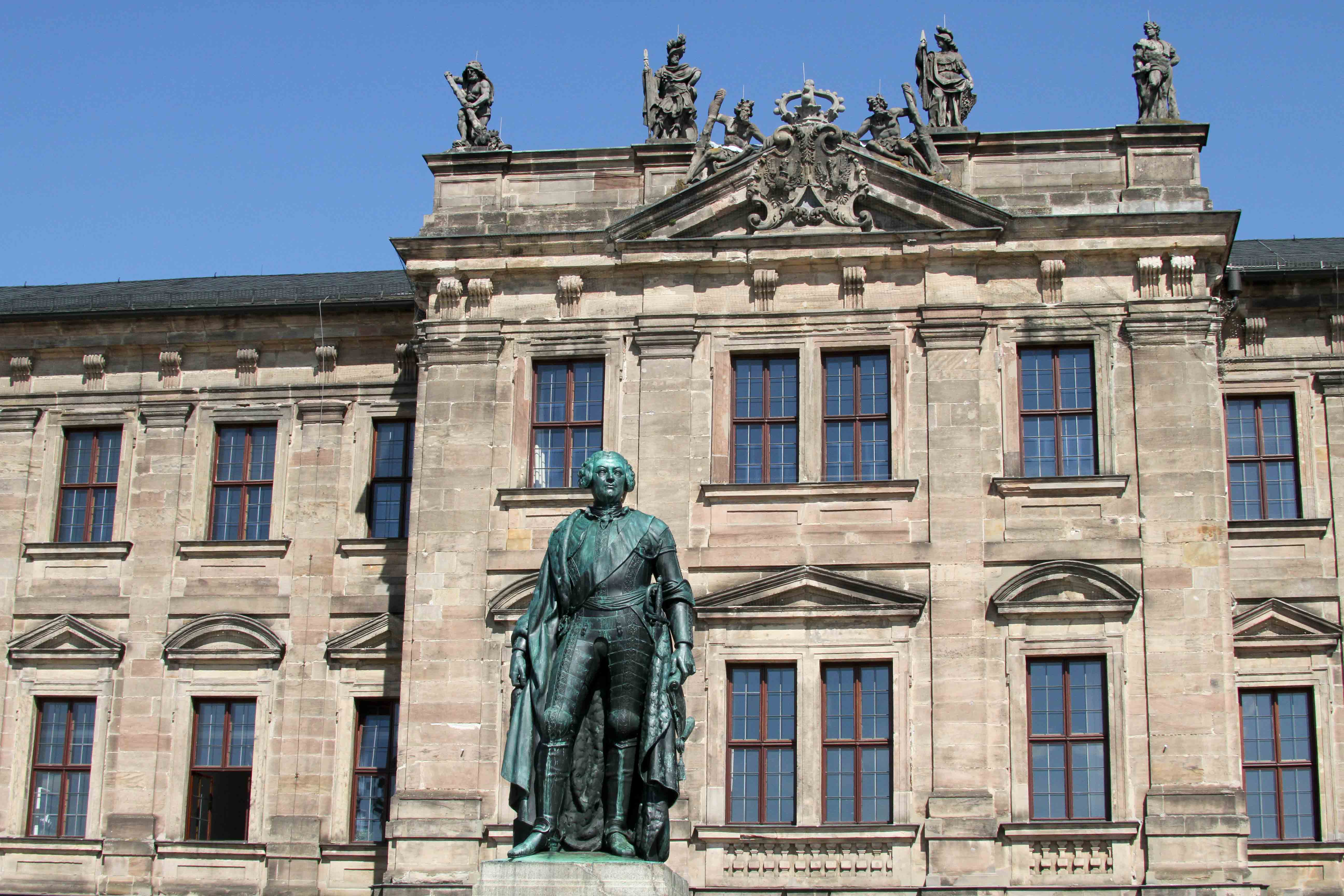 The main University building (photo by Georg Pöhlein)
GeoZentrum Nordbayern
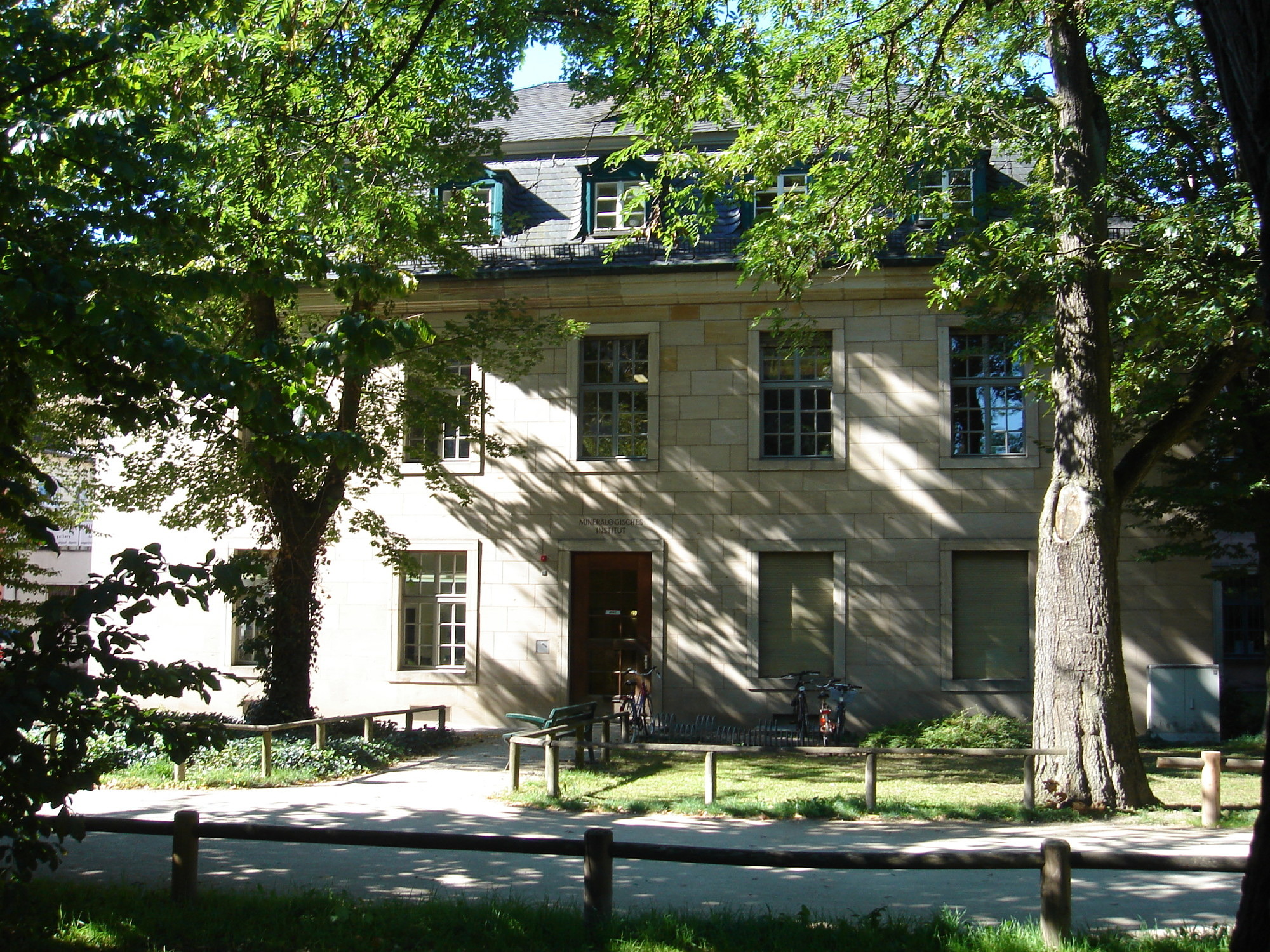 The main building of the GeoZentrum (entrance to Mineralogy)
The GeoZentrum Nordbayern is a research oriented institute, comprising eleven working groups, that focus on foundational and applied aspects of geoscience. The environment is highly interdisciplinary and we have three internationally recognized research priorities: crustal dynamics, paleo-environments, and applied geosciences. The GeoZentrum organizes the majority of courses related to the master program.
The main building of the GeoZentrum has a very central location, in the Gardens of the University Castle (in the Schloßgarten). Most geosphere- and hydrosphere-related courses take place in this building or the building next door (Kollegienhaus).
For historic reasons, the Paleontology (Lehrstuhl für Paläoumwelt) is somewhat separated physically from the rest of the GeoZentrum, and its buildings are spread out. The main Paleontology building (usually referred to as the “Pal”) is technically an old, three-storey villa, about ten minutes of walk away from the GeoZentrum, in Loewenichstr. 28. Some parts of the palaeontology collection are also stored in the basement.
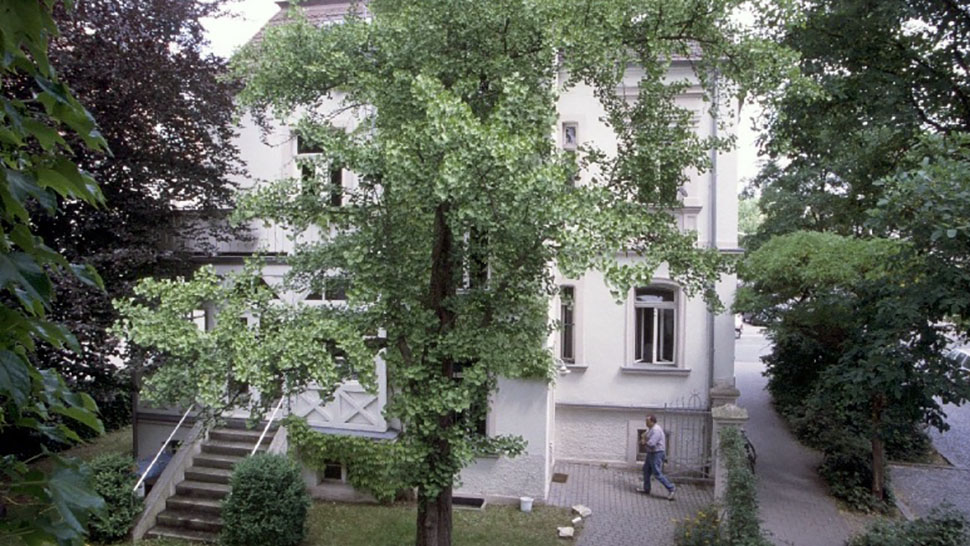 The main PAL building (photo by Axel Munnecke)
The Institute of Geography

The Department of Geography is another research oriented institute, comprising twelve working groups, that focus on physical and cultural geography. Within physical geography the research priorities are climate research, environmental studies, and geoinformatics. Members of the Institute of Geography organize atmosphere-related courses. The Institute of Geography is located just outside Erlangen (Tennenlohe) and is accessible by public transport.
Science Technology and Gender Studies

The Chair of Science, Technology and Gender Studies belongs to the Faculty of Humanities, Social Sciences, and Theology at FAU and develops tools to help us comprehend the impact of science, technology and medicine on humans and the environment. Research topics include gender science studies, nuclear history, and science diplomacy. One of the team’s objectives is to create a platform for training, research, and international engagement, linking Earth system science with diplomacy, policy processes, and equitable global partnerships. Members of the Chair organize humanities-related courses. The Institute is located in the center of Erlangen (in Werner-von-Siemens-Straße).
BayCEER (University of Bayreuth)
The Bayreuth Center of Ecology and Environmental Research (BayCEER) is based at the University of Bayreuth and is composed of 30 working groups in the biosciences and geosciences from across the university. Their research seeks to address the major ecological challenges of our time: global change and climate change, the loss of biodiversity and ecosystems, and the sustainable use of natural resources. Together with staff at Paleontology Institute, our colleagues at BayCEER contribute to biosphere-related courses. BayCEER is based in the town of Bayreuth (approximately 2 hours by train from Erlangen), but core courses taught by members of BayCEER are based in Erlangen.
The city of Erlangen
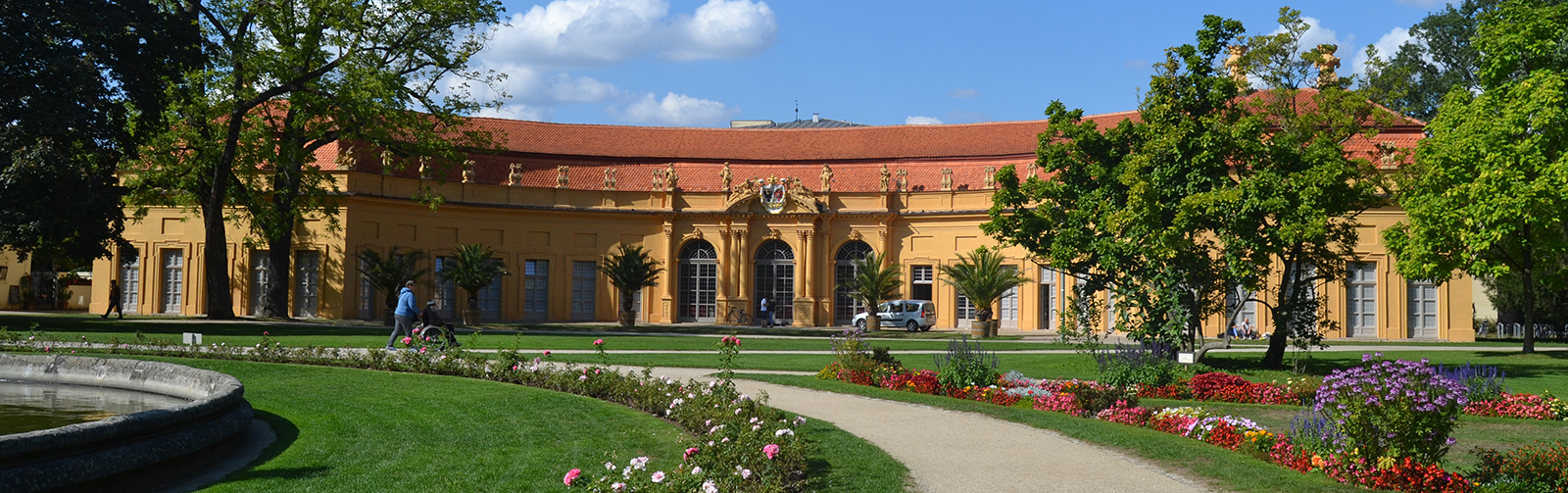 The ‘Orangerie’ in the Schloßgarten (photo by Laura Albers)